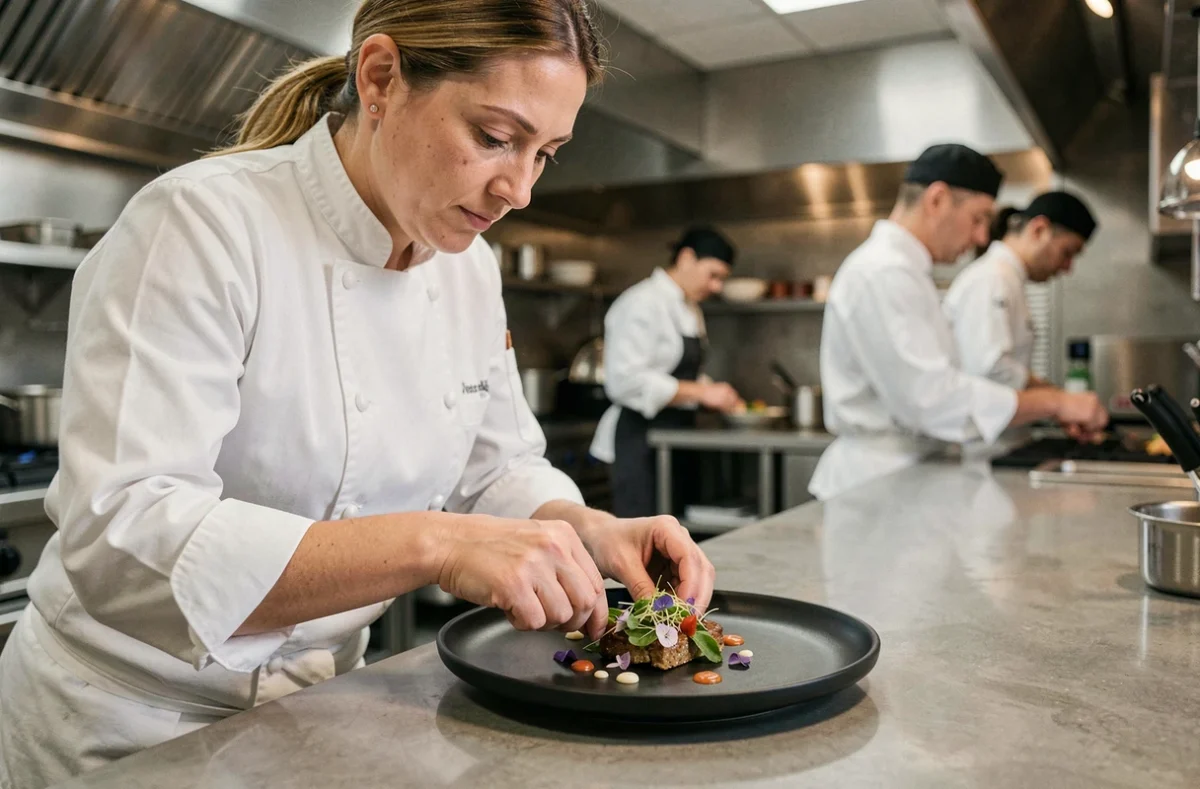
On the menu of a Lyon bistro, a dish of grilled shiitake mushrooms over binchotan now takes the place of the beef fillet. In Paris, a snacking counter offers takeaway aligot bites between meetings. This year’s culinary innovations are not limited to exotic ingredients: they reflect a concrete change in how we eat, where we eat, and what we are willing to pay.
Cooking over fire and fermentation: techniques redefining menus
Inspectors from the Michelin Guide note on the ground: charcoal cooking, over flames, or on hot stones is no longer reserved for Nordic or Japanese restaurants. In Sweden, establishments like Knystaforsen explore slow cooking over wood fire. In France, chefs are adopting binchotan (Japanese white eucalyptus charcoal) to work with vegetables and meats, achieving a depth of flavor that gas cannot produce.
This return to fire is accompanied by a renewed interest in fermented foods. Kimchi, homemade miso, seasonal vegetable pickles: these ancestral preparations are reappearing on menus, not as side dishes but as central components of the dish. This dual trend reflects a simple logic: less technology in the kitchen, more time and raw materials.
To keep up with these developments over the weeks, the news to follow on 75cl regularly covers movements in the sector, both in wine and dining.
Gastronomic snacking: when fast meals change their tune
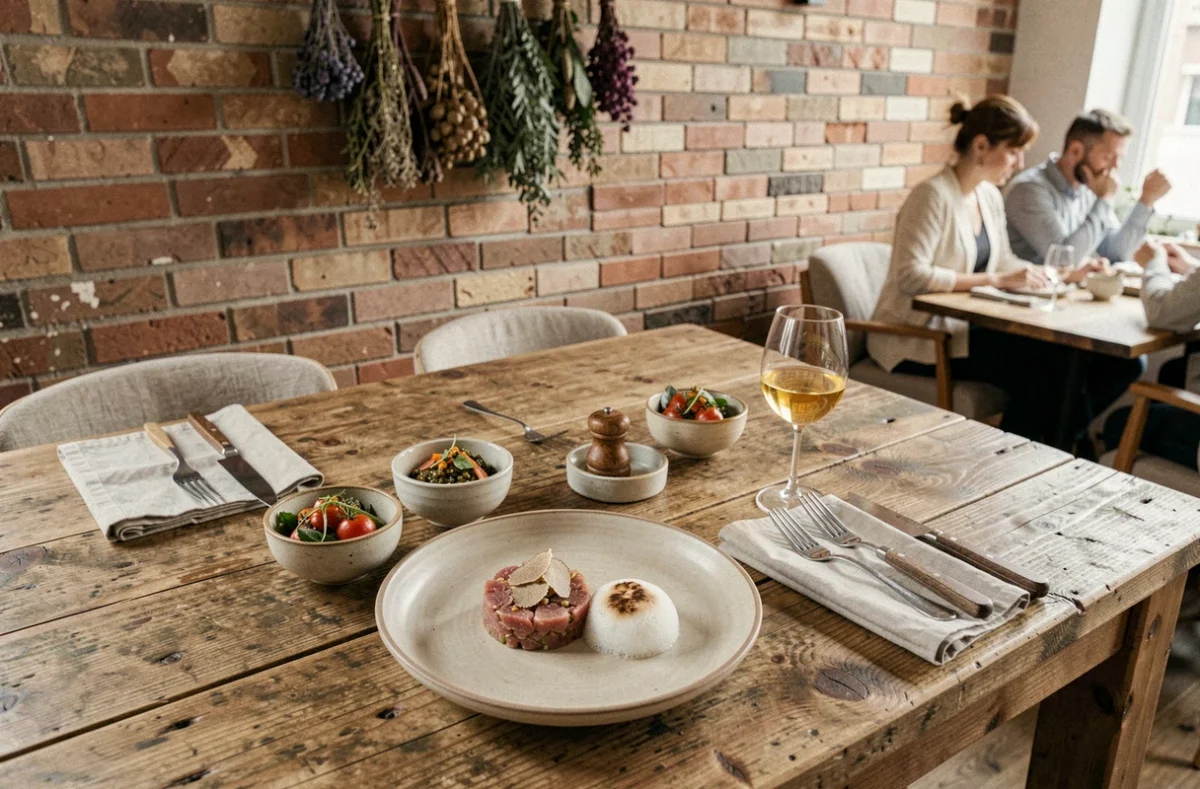
Snacking is no longer limited to a triangle sandwich eaten standing up. An article from Les Échos published in October 2026 describes the rise of quick and mobile food options, driven by urban lifestyles and the influence of social media. Dining outside the table becomes a true gastronomic segment, with offerings borrowing from the codes of seated dining.
Dedicated counters for elaborate bites are emerging: individual portions of aligot, made-to-order focaccia, bao stuffed with roasted vegetables. The common thread of these formats is that they allow restaurateurs to offer a lower average ticket while maintaining high standards for the product.
This transformation responds to a real constraint. The France Dining Out Report 2025 from YouGov indicates that consumers are reducing the frequency of their restaurant outings or choosing cheaper establishments, ordering fewer items. Carefully crafted snacking becomes a concrete response to price considerations.
Vegetal culinary trends: beyond meat substitutes
Vegetables are taking an increasingly central place on menus, but not in the form of ultra-processed veggie steaks. Chefs are working with whole roasted cauliflower, celery root in a salt crust, smoked beetroot. The plant-based is gaining recognition through technique, not imitation.
This approach distinguishes itself from the wave of alternative proteins in recent years. There is no longer an attempt to replicate the texture of meat: vegetables are valued for what they are. Mushrooms, for example, are moving from being a side dish to a main course, treated with the same care as a beef cut.
- Mushrooms (shiitake, oyster, king oyster) are cooked grilled, braised, or in broth, as a standalone dish rather than as an accompaniment
- Root vegetables (parsnip, Jerusalem artichoke, rutabaga) are making a strong comeback thanks to long cooking methods in the oven or under ash
- Wild herbs and leaves (wild garlic, purslane, oxalis) are invited to the plates for their bitterness and freshness, often foraged from very short supply chains
Vegetables no longer replace meat; they impose their own flavor profile.
Organic and local in collective catering: what diners really expect
An opinion study conducted for Cniel and Interfel, presented in October 2026, reveals a gap between intentions and perceptions. Respondents in collective catering more favorably associate organic with French origin or seasonal products. In other words, organic alone is not enough; it must be clear and locally rooted.
The study also highlights a lack of clarity regarding the information on the meals served. Diners want to know where their food comes from, but displays often remain vague or absent. For canteens and corporate restaurants, the challenge is not just to buy organic: it is to make it visible and understandable at the time of service.
This observation aligns with a broader trend observed in gastronomy. Local and homemade are not marketing arguments but concrete selection criteria. Farmers’ markets, restaurant kitchen gardens, and formalized short supply chains between growers and chefs are part of this movement. Provenance becomes an element of the menu just like the name of the dish.
World flavors on French menus: fusions and Asian inspirations
Thai, Korean, and Chinese cuisines are increasingly influencing the menus of French restaurants. We are not talking about ethnic restaurants, but about chefs trained in France who integrate Asian techniques and ingredients into their cooking: dashi broths, gochujang sauces, high-temperature wok cooking.
- Gochujang (Korean fermented chili paste) appears in dressings, meat marinades, and glazes for roasted vegetables
- Dashi, a Japanese broth made from kombu and bonito, serves as a base for sauces and cooking juices in French bistros
- Sichuan spices (pepper, face-of-god chili) are featured in chicken or fish dishes in a French style
These fusions rely on locally available products, which distinguishes them from mere exoticism on the menu. Chefs adapt recipes to French seasons rather than importing ingredients that are out of sync.
This year’s culinary innovations share a common thread: a return to simple gestures (fire, fermentation, raw vegetables) while expanding the vocabulary of flavors through world cuisines. The format of the meal itself is evolving, between carefully crafted snacking and more transparent collective dining. What is changing sustainably is less the content of the plate than the way we choose what goes on it.