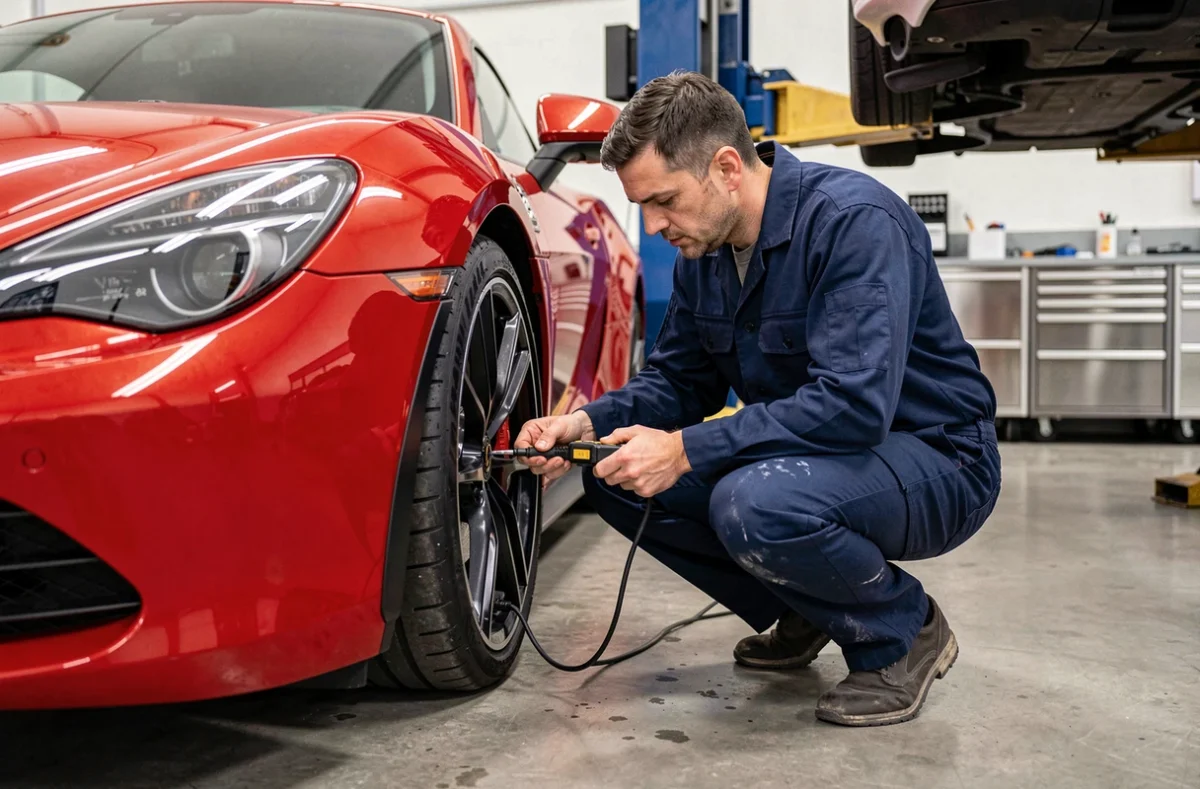
Regular maintenance, engine repair, track preparation, or resale: a sports car in Mâcon requires skills and constraints that general garages do not always cover. Between mechanical specifics, Crit’Air regulations, and consignment options, several factors deserve comparison before entrusting your vehicle or finalizing a transaction.
Collector’s registration and Crit’Air: two statuses that change the use of a sports car in Mâcon
Even before discussing mechanics, the administrative status of a classic or high-powered sports car determines its daily use. Two systems come into play and produce opposing effects depending on the vehicle’s profile.
The collector’s registration applies to vehicles over thirty years old. It facilitates the registration of models whose original parts no longer meet current standards.
In contrast, Crit’Air restrictions affect classic or high-displacement diesel sports cars that do not have a favorable sticker. The low emission zones (ZFE) of Lyon or Dijon, accessible in less than two hours from Mâcon, enforce perimeters, schedules, and exemptions set by local decree. Each ZFE defines its own traffic and enforcement rules, making verification necessary before a purchase or regular travel.
A specialized professional in Mâcon like maconsport-automobiles.com incorporates this dual verification into pre-purchase advice, cross-referencing the type of engine, intended use (track, road, trips to major urban areas), and the vehicle’s administrative status.
| Criteria | Collector’s registration | Standard registration + Crit’Air |
|---|---|---|
| Vehicle age | Over 30 years | Any age |
| Technical inspection | As per current regulations | Standard (every 2 years) |
| ZFE access (Lyon, Dijon) | Exemptions possible as per local decree | Depends on the assigned Crit’Air sticker |
| Resale | Collector’s market, specific valuation | Classic market, depreciation linked to age and emissions |

Maintenance and repair of sports cars: what distinguishes a specialized garage
A sports car engine (boxer, V6, V8, or high-pressure turbo) imposes maintenance intervals, lubricants, and diagnostic protocols different from those of a sedan. The oil change of a dry-sump flat-six, for example, does not follow the same oil volume or procedure as a classic four-cylinder.
The brakes constitute another critical area. Ventilated or ceramic composite discs, common on recent sports cars, require precise measuring tools (thickness gauge, runout check) and pads compatible with high operating temperatures. A poor pairing of pads and discs degrades braking performance in just a few outings.
Points of caution during sports maintenance
- The multi-brand electronic diagnosis must cover specific controllers (engine management, controlled differential, adaptive suspension) and not just generic OBD codes.
- Cooling deserves systematic checking: radiator, hoses, thermostat, and fans, especially before circuit use.
- High-speed rated tires (V, W, Y) must be mounted with the appropriate torque and balancing to avoid vibrations at high speeds.
- The reinforced or twin-disc clutch, common in modifications, requires a specific adjustment absent from standard manufacturer manuals.
In Mâcon and the south of Saône-et-Loire, a few workshops offer this level of service. The most reliable selection criterion remains the garage’s ability to present its experience with the specific brand and model, rather than a general certification.
Track preparation in Saône-et-Loire: an underestimated local use
The region offers access to several racetracks, and preparing a sports car for track use is not limited to a tire change. Brakes, cooling, oil, and insurance form a set that must be addressed simultaneously.
Track use increases the operating temperatures of all fluids. The engine oil must withstand prolonged thermal peaks, which directs you towards grades suitable for the manufacturer’s recommendations. Brake fluid deserves particular attention: after a few intensive sessions, a high boiling point fluid reduces the risk of loss of braking efficiency.
Insurance is often a neglected angle. Most auto contracts exclude damages occurring on the track. Specific coverage, on a daily basis, must be obtained before each track session. Transporting the vehicle on a trailer to the track, rather than a road trip, preserves consumables (tires, pads) and reduces the risk of incidents on open roads.
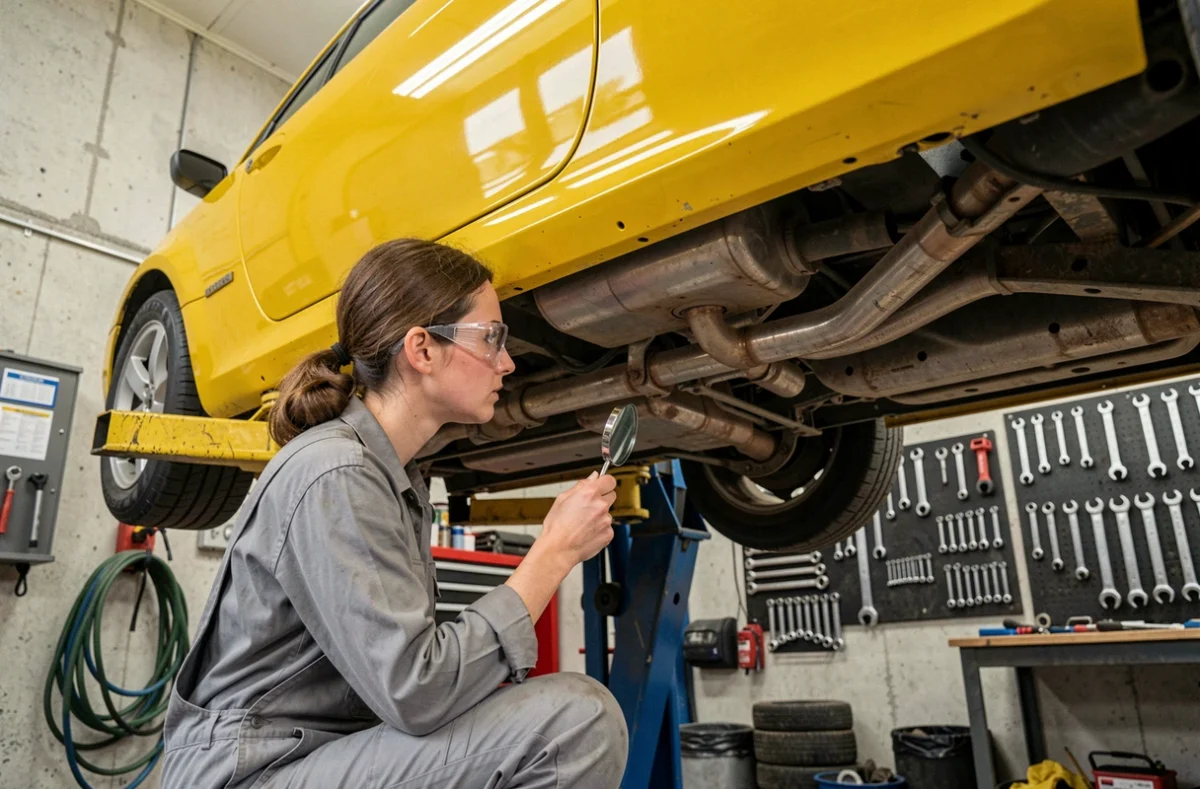
Consignment sale of sports cars in Mâcon: concrete criteria for comparing offers
Selling a sports car through consignment avoids the management of ads, test drives, and negotiations. The principle is simple: the professional displays, promotes, and sells the vehicle for a commission. The differences between providers concern several points that are rarely detailed.
- Prior expertise: some establishments conduct a complete mechanical inspection before sale, while others only perform a visual check.
- Storage: a sports car parked outside for several weeks suffers degradation (UV damage to paint, sticking brakes). Covered and secure storage protects the vehicle’s value.
- Transparency on the net seller price: the commission and additional fees must be detailed before signing. A displayed percentage is not sufficient if additional fees for online listing, cleaning, or administrative procedures are added.
BH Car, located in Replonges near Mâcon, claims to handle promotion, administrative procedures, and sales. Comparing this offer with other local players based on the criteria above allows for an informed choice.
The local market for sports cars in Mâcon remains structured around independent professionals rather than large dealerships. This particularity fosters a direct relationship between owner and specialist but requires verifying technical skills and contractual conditions yourself. The right reflex is to cross-check administrative status, technical capability, and sales conditions before making any decision.