In the kitchen, juggling with units of measurement can sometimes become a real headache. Between grams, milliliters, cups, and tablespoons, it’s easy to get mixed up. However, mastering these conversions is essential for successfully executing recipes and avoiding unpleasant surprises.
Fortunately, there are simple tips to help you out. From conversion charts available online to dedicated mobile apps, there are plenty of tools to make the task easier. With a little practice, converting grams to cups or milliliters to tablespoons will become child’s play.
Conversions of liquid and solid measurements in the kitchen
The different units of measurement used in the kitchen can quickly become sources of confusion. For liquids, the equivalents are as follows: 1 cl equals 10 ml, 10 cl equals 100 ml, and so on. For example, converting 150 ml to centiliters means using 15 cl. Solid measurements are no exception, with equally precise conversions.
Common equivalents
| Unit | Equivalent |
|---|---|
| 1 cl | 10 ml |
| 10 cl | 100 ml |
| 15 cl | 150 ml |
| 50 cl | 500 ml |
| 75 cl | 750 ml |
| 100 cl | 1,000 ml |
Liquid and solid measurements
- 1 teaspoon: about 5 ml or 5 g
- 1 tablespoon: about 15 ml or 15 g
- 1 cup of tea: about 250 ml
- 1 medium glass: about 200 ml
- 1 medium bowl: about 400 ml
- 1 large bowl: about 600 ml
For solid ingredients, the equivalents are just as significant. A tablespoon of flour weighs about 12 g, while a tablespoon of sugar weighs 15 g. Using a conversion chart helps ensure the accuracy of quantities, thus avoiding dosage errors.
Take the time to familiarize yourself with these basic measurements: they will help you succeed in all your culinary preparations, from the simplest to the most complex. Consider that precision in conversions is the key to a successful recipe.
Tools and tips for precise conversions
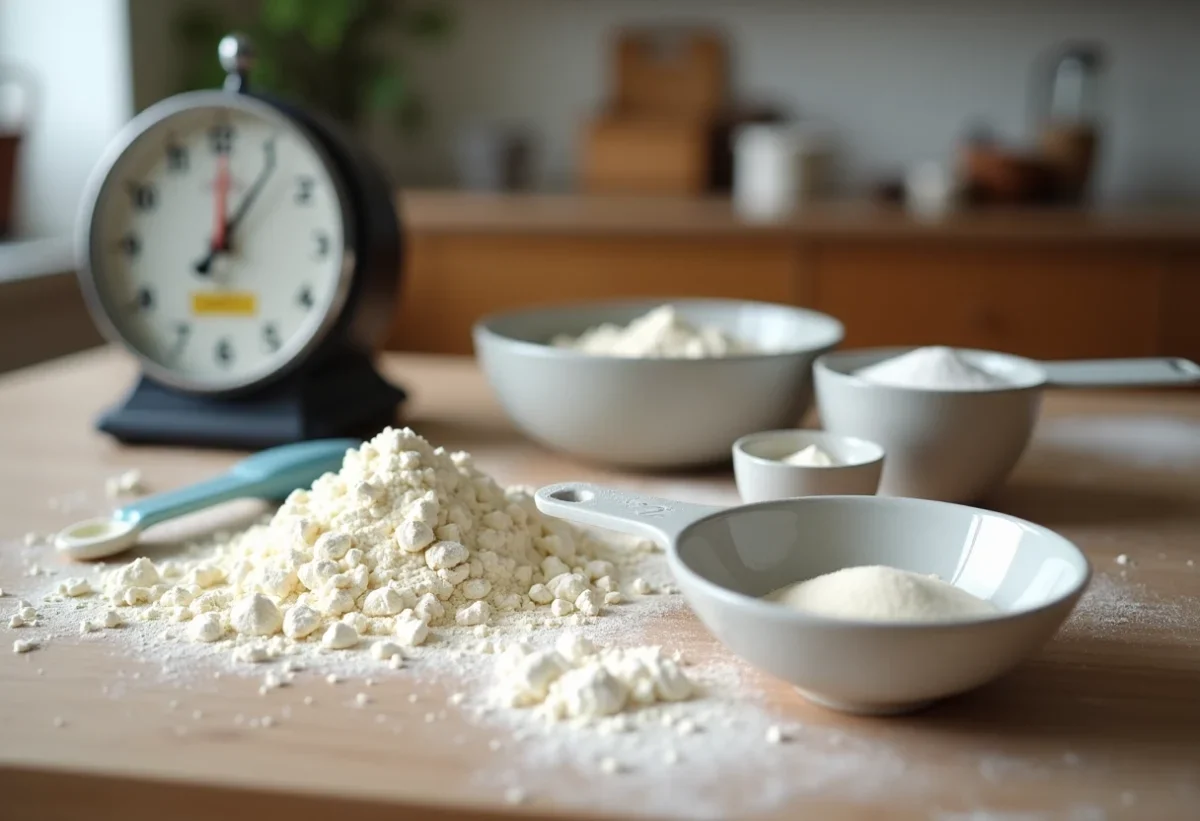
For precise conversions in the kitchen, several tools are essential. The measuring cup, calibrated in milliliters and grams, greatly facilitates liquid and solid measurements. Use a kitchen scale to weigh dry ingredients like flour, sugar, or spices.
Conversion tools
- Measuring cup: ideal for measuring liquids.
- Kitchen scale: essential for dry ingredients.
- Measuring spoons: perfect for small quantities.
Mobile apps and specialized websites also offer detailed conversion charts. These digital tools allow for quick conversion of quantities into grams, kilograms, milliliters, or liters. For example, an app can automatically convert 50 grams of flour into 0.05 kilograms or 0.5 deciliters of liquid into 50 milliliters.
Practical tips
To avoid approximations, follow these tips:
- Use measuring spoons for small quantities.
- Adopt a digital scale for maximum precision.
- Refer to reliable conversion charts for temperatures, especially between Celsius and Fahrenheit.
For example, temperature conversion is often necessary in international baking. Converting 180° Celsius to 350° Fahrenheit is a common task. Use apps or reference websites for these conversions. Similarly, for liquids, 1 liter equals 0.26 US gallon, which is useful for Anglo-Saxon recipes.
By applying these tips and using the right tools, conversions of measurements in the kitchen become simple and precise.