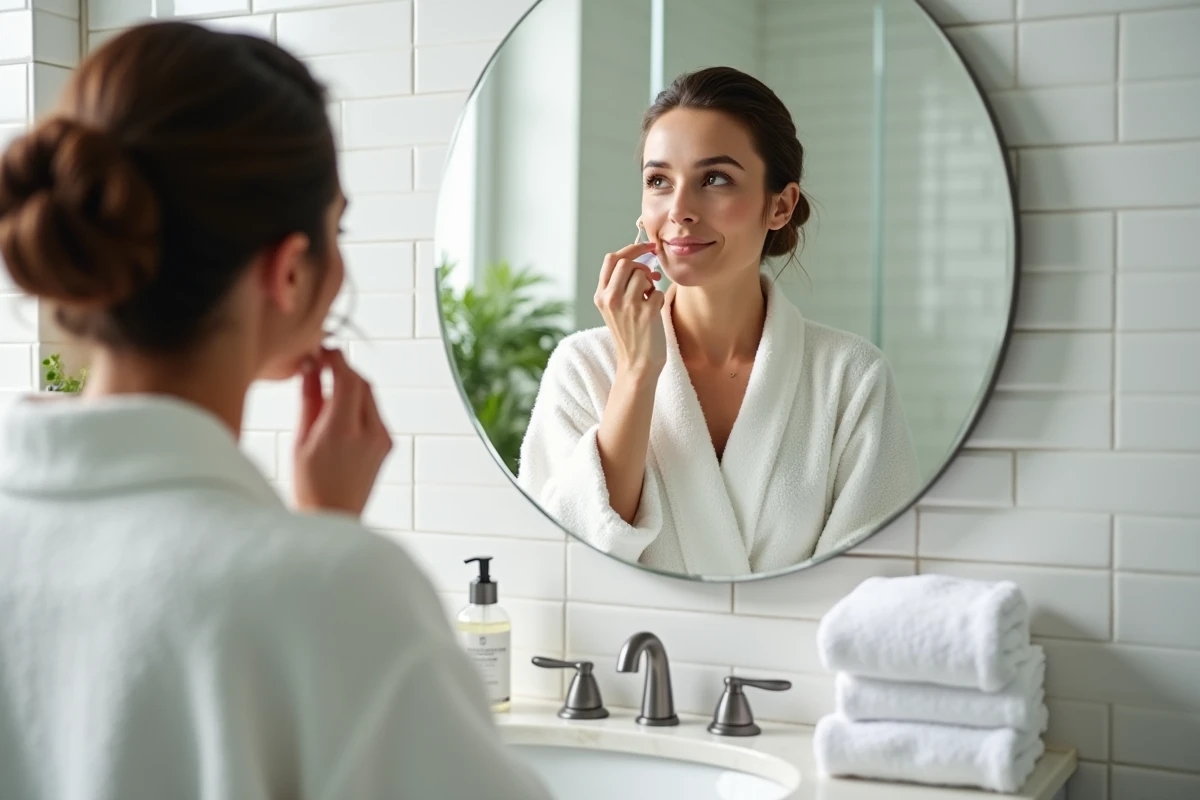
A skin that feels tight after the morning cleanse, a serum that pills under the cream, a dull complexion despite a six-step routine: these situations rarely point to a bad product. They indicate a problem of order, dosage, or compatibility between the applied treatments. Adjusting a few gestures changes the outcome more than adding yet another bottle to the shelf.
Blue light from screens and skin aging: an underestimated factor in beauty routines
We spend several hours a day in front of a screen, and the skin bears the brunt without us realizing it. High-energy visible light, known as blue light, exacerbates pigmentation spots and oxidative stress, particularly on medium to dark skin. Studies published in the Journal of Investigative Dermatology between 2022 and 2024 documented this effect, and ANSES now recommends incorporating specific filters or targeted antioxidant treatments into the daily routine.
In practical terms, look for a serum with stabilized vitamin C or niacinamide, applied in the morning before the moisturizer. These active ingredients neutralize some of the free radicals generated by prolonged screen exposure. A broad-spectrum sunscreen, which also covers visible light, completes this protection. This is not a gesture reserved for sunny days: blue light acts even indoors.
Specialized resources like blogbeaute.fr allow you to compare formulations suitable for each skin type and keep up with the latest in skin protection.

Skinimalism: reducing steps to enhance facial radiance
Stacking cleanser, toner, essence, serum, ampoule, cream, and oil seems logical when each product promises a benefit. In practice, cosmetic overload weakens the skin barrier. We observe redness, micro-irritations, and sometimes breakouts that did not exist before adding the latest trendy treatment.
The skinimalist trend, documented by analysis firms like NPD Group and Kantar since 2023-2024, is based on a voluntary reduction in the number of products. The idea is not to eliminate everything but to keep only the treatments that the skin needs.
Building an effective three-product beauty routine
We start with the functional minimum and add a treatment only if a problem persists after three weeks. The basics look like this:
- A gentle cleanser suitable for your skin type (foaming gel for combination to oily skin, milk or cleansing oil for dry skin), used morning and night
- A targeted serum addressing the main concern (hydration, radiance, imperfections), applied on slightly damp skin to enhance the absorption of the active ingredients
- A moisturizer that also acts as a protective barrier, paired with a sunscreen in the morning
With these three steps, we cover cleansing, treatment, and protection. If localized imperfections persist, a spot treatment applied locally is sufficient, without altering the rest of the routine.
Order of application for facial treatments: the texture rule that changes everything
The question often arises: serum before or after cream, oil first or last. The answer lies in a simple principle. Always apply from the thinnest to the thickest. A watery serum goes before a rich cream, which goes before a vegetable oil.
Why this is crucial: applying oil before a water-based serum creates a lipid film that prevents water-soluble actives from penetrating. Even if you use a quality vitamin C serum, it remains on the surface and pills when applying makeup.
Waiting time between each product
We often underestimate the wait time needed between two layers. Allowing one to two minutes between the serum and cream lets the first layer start to absorb. The skin should no longer feel sticky to the touch before applying the next step. Feedback varies on this point: some skin absorbs quickly, while others retain a surface film longer.
A reliable indicator: if makeup pills or if sunscreen leaves white marks, it means the previous layer hasn’t had time to set.

Skin microbiome and choice of skincare products
The skin hosts an ecosystem of microorganisms that contribute to its defense and balance. An overly aggressive cleanse destroys this microbiome and leaves the field open for bacteria responsible for irritations or imperfections.
In practice, this means avoiding sulfate-based cleansers (SLS, SLES) when the skin is neither very oily nor exposed to significant dirt. A cleanser with a pH close to that of the skin, around 5.5, better preserves this balance. We also favor formulas without high concentrations of denatured alcohol, an ingredient that dries out and disrupts the skin flora.
Cosmetic claims and European regulations
Since the tightening of controls related to Regulation (EU) No. 1223/2009, the DGCCRF in France has been monitoring the terms “clean beauty,” “cruelty-free,” or “100% natural” on packaging more closely. Misleading claims can now be subject to penalties, prompting brands to document their promises.
For us consumers, this means that a label or marketing claim does not replace reading the INCI list. Checking the first three or four ingredients gives a more reliable idea of what the product actually contains than any slogan on the packaging.
- Look for the claimed actives in the first third of the INCI list (the higher an ingredient is, the higher its concentration)
- Beware of very long lists that dilute active ingredients among texturizers and fragrances
- Compare two or three similar products by looking at the position of the same actives to assess relative dosage
Adapting your daily beauty routine does not involve accumulating products or complicated gestures. Protecting the skin from blue light, reducing unnecessary steps, respecting the order of textures, and preserving the skin microbiome: these four axes cover most common skin issues. The rest is observation, week after week, to adjust according to what the mirror and the skin reflect.