One in five French people reports suffering from persistent anxiety symptoms during their lifetime, but less than half dare to consult or seek concrete solutions. Despite the proven effectiveness of certain treatments, a majority continues to ignore or underestimate the daily impact of anxiety disorders.
Research-validated strategies often remain unknown or poorly applied, while simple adjustments can yield lasting results. The latest recommendations emphasize action, experimentation, and regularity, far from preconceived notions or miracle cures.
Why anxiety settles in: better understanding to act better
Nothing is ever left to chance in the workings of anxiety. Behind each episode, a subtle mechanism comes into play. This disorder, whether it manifests as persistent worries or physical symptoms like palpitations and shortness of breath, does not simply pass. Generalized anxiety disorder imposes a continuous tension, while panic disorder strikes unexpectedly, with disarming violence. Other variants, such as social phobia, draw their strength from the fear of others’ judgment, while specific phobias target well-defined situations.
The reasons for this onset are multiple. Genetics poses an immediate bias: if anxiety runs in the family, the ground is fertile. But the body also plays a role. An imbalance in certain neurotransmitters, such as serotonin and dopamine, disrupts emotional management. Too little serotonin, and nervousness is more likely to creep in. Dopamine, on the other hand, colors mood and influences stress resistance.
Alongside this, the environment weighs heavily. Here are some factors that promote or maintain anxiety disorders:
- Chronic stress, whether from family tensions or painful events, eventually exhausts resilience capacity.
- Social media, by encouraging comparison and hyperstimulation, fuels worry and fear of judgment.
- Rumination, the phenomenon of looping thoughts, feeds vulnerability to anxiety.
- Perfectionism, with its excessive demands, creates a climate of permanent dissatisfaction.
Each journey remains unique, and the range of causes varies according to life stories. To deepen the understanding of anxiety disorders and broaden the avenues for solutions, Hub Santé’s articles shed light on approaches that have truly proven effective.
How to recognize the signs of an anxiety disorder in daily life?
Anxiety infiltrates quietly, often hidden behind routine. Yet, certain signals are unmistakable. An omnipresent worry occupies the mind, transforming every detail into a source of tension. Thoughts race, tranquility disappears. Rumination takes over: it’s impossible to escape the vicious cycle of repetitive ideas.
The body also eventually protests. Muscle tension that doesn’t relax, clenched jaws, pulling shoulders. Sleep becomes capricious: nights shorten, awakenings are exhausting. Often, appetite is affected, with digestive issues, feelings of a knotted stomach, and sometimes even nausea. Hypervigilance sets in: the slightest detail becomes suspicious, and threats seem to be everywhere.
But anxiety doesn’t stop there. The fear of judgment or failure intensifies, fueled by the perfectionism that makes every social interaction exhausting. Speaking in public, exchanging at work, even moments with friends become complicated. Gradually, exhaustion takes hold, desires crumble, and life seems to slow down.
Identifying these manifestations, both physical and psychological, requires a genuine look at oneself. If these symptoms settle in, recur, and harm quality of life, it’s time to name them. This is the beginning of a journey towards a more serene daily life.

Concrete and lasting solutions to regain control over anxiety
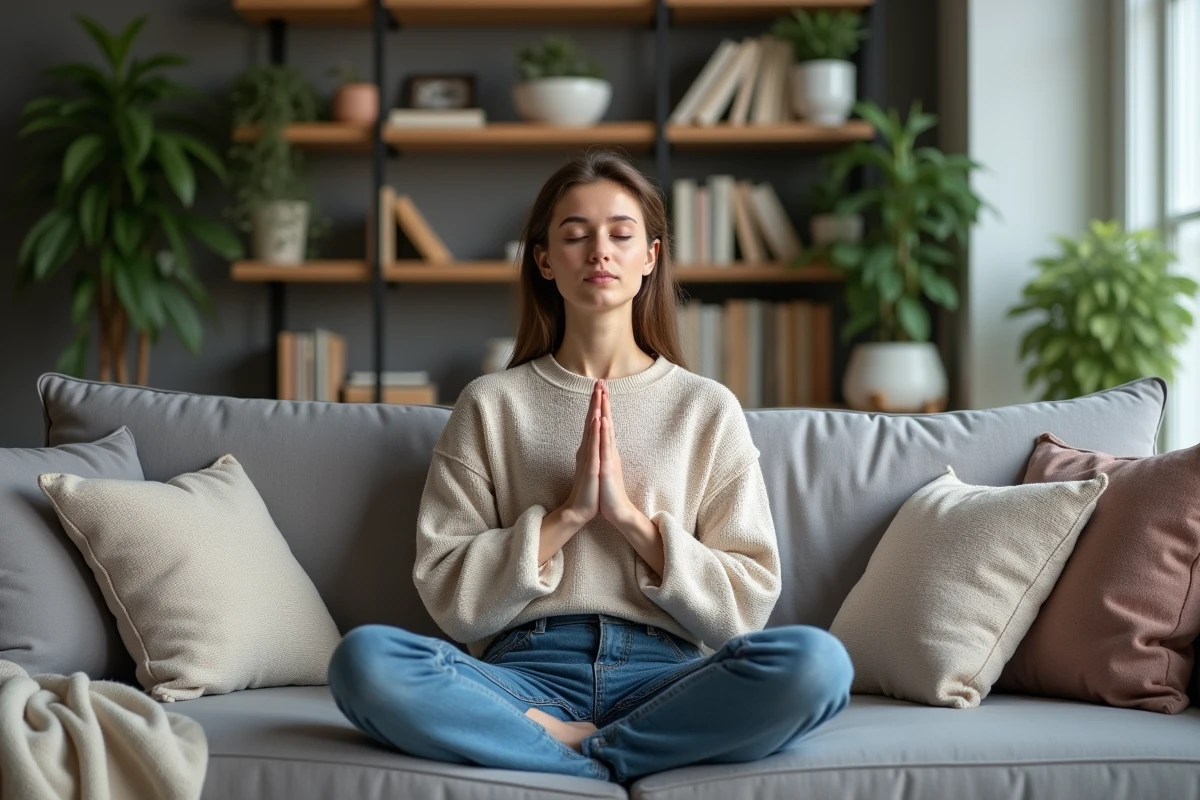
There is no one-size-fits-all formula to free oneself from anxiety, but experience shows that several levers can transform daily life. Recognizing and accepting anxiety without trying to flee from it is already a way to disarm its grip. Breathing exercises, heart coherence, or abdominal breathing help the body learn to regain calm, slow down the pace, and soothe the mind.
Physical activity acts as a natural antidote. Whether it’s a walk, some laps in the pool, or a few kilometers on a bike, movement releases endorphins and eases tension. A regular routine, even modest, is better than intensive and sporadic practice. The body appreciates routines, and every effort counts.
Mindfulness, through meditation or simple moments of attention, helps return to the present moment. Observing thoughts without judgment allows for their impact to be diminished. Writing also serves this distancing role: putting worries on paper, keeping a journal, is already a way to start gaining perspective and identifying thoughts that fuel anxiety.
Professional support can prove crucial. Cognitive and behavioral therapies (CBT) rely on proven protocols to modify anxious habits and relearn how to react differently. A clinical psychologist or a general practitioner can accompany, listen, and guide if necessary towards other suitable solutions, whether medication-based or not. Leaning on loved ones, talking, and sharing remains a solid foundation to lighten the burden of disorders.
Here are some simple habits to integrate into daily life to reinforce this work:
- Establish a stable routine to limit uncertainty day by day.
- Ensure a varied diet, rich in magnesium and vitamins, to support the nervous system.
- Regularly allow time for activities that bring pleasure, without performance pressure.
Anxiety is not a fatality. By implementing these strategies, everyone can gradually regain control over their thoughts and move towards a life where worry no longer dictates the rules. At the end of the journey, it’s a regained breath, a space of freedom opening up, where anxiety had once taken over.