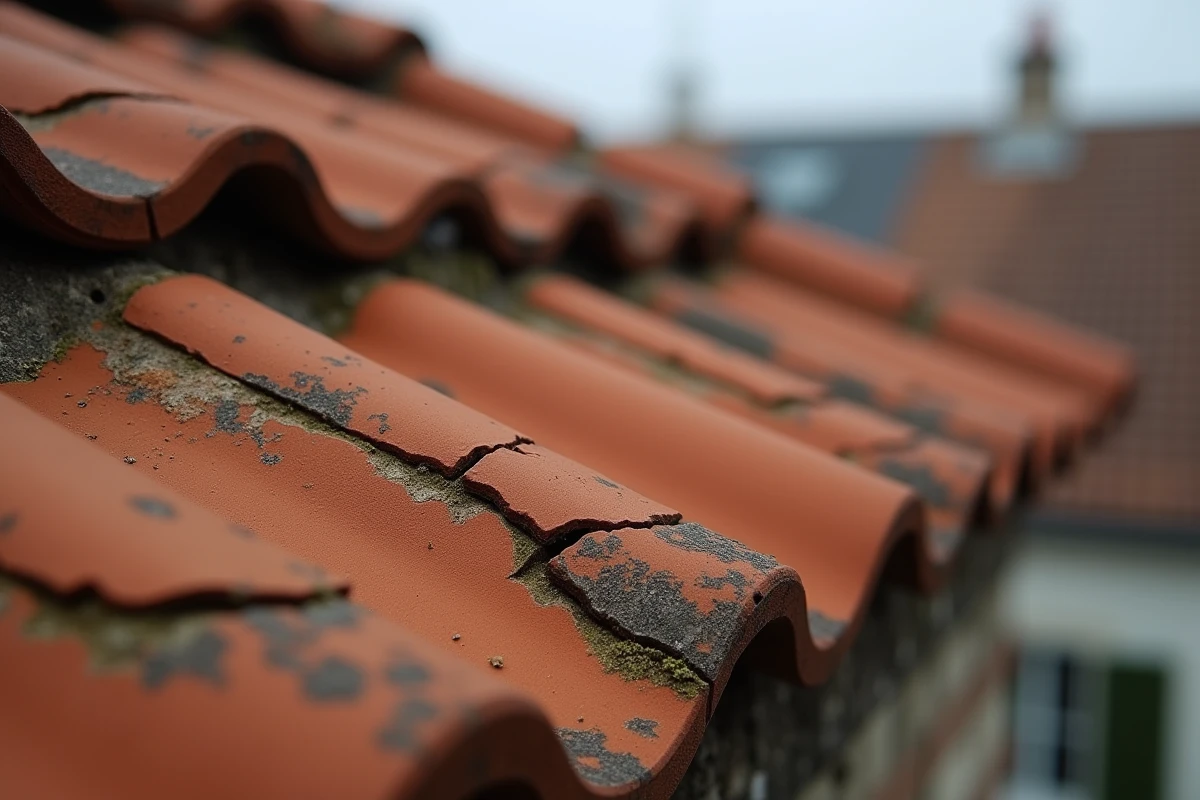
A cracked tile allows water to seep through long before a stain appears on the ceiling. The cracking of tiles results from specific physical mechanisms, not just simple wear over time. Understanding these mechanisms helps in choosing the right repair and avoiding the same work two years later.
High-pressure cleaning and micro-cracks: the damage we inflict on ourselves
The first factor of cracking that repair guides do not address is the one that the homeowner causes themselves. The high-pressure cleaner used too close to the tiles opens the pores of the material, weakens the surface, and creates micro-cracks invisible to the naked eye at the time of cleaning.
These micro-cracks only reveal themselves after several freeze-thaw cycles. Water seeps into the open pores, freezes, expands, and each winter widens the crack a little more. On already old tiles, the phenomenon accelerates considerably.
Roofing professionals recommend controlled pressures or low-pressure chemical treatments for moss removal. If the roof has been cleaned with a pressure washer in recent years, it is worth inspecting the tiles exposed to the north (those that experience the most frost) before considering any other intervention. To better understand the causes and know how to repair a cracked tile with Peps Immobilier, a prior diagnosis remains the first logical step.

Cracking mechanisms of tiles: frost, expansion, and manufacturing defects
Beyond cleaning, three main mechanisms explain why tiles crack on a roof.
Repeated freeze-thaw cycles
Water absorbed by a porous tile increases in volume when it freezes. This expansion exerts enough internal pressure to crack the material. Regions with cold, humid winters are the most affected, but a single night of frost is enough if the tile is already weakened.
Thermal expansion and mechanical shocks
Temperature differences between day and night constantly stress the tiles. Add to that the fall of a branch, the step of a technician working on an antenna, or simply hail, and the crack appears on a tile already under tension.
Concrete tiles from the 80s-90s: a special case
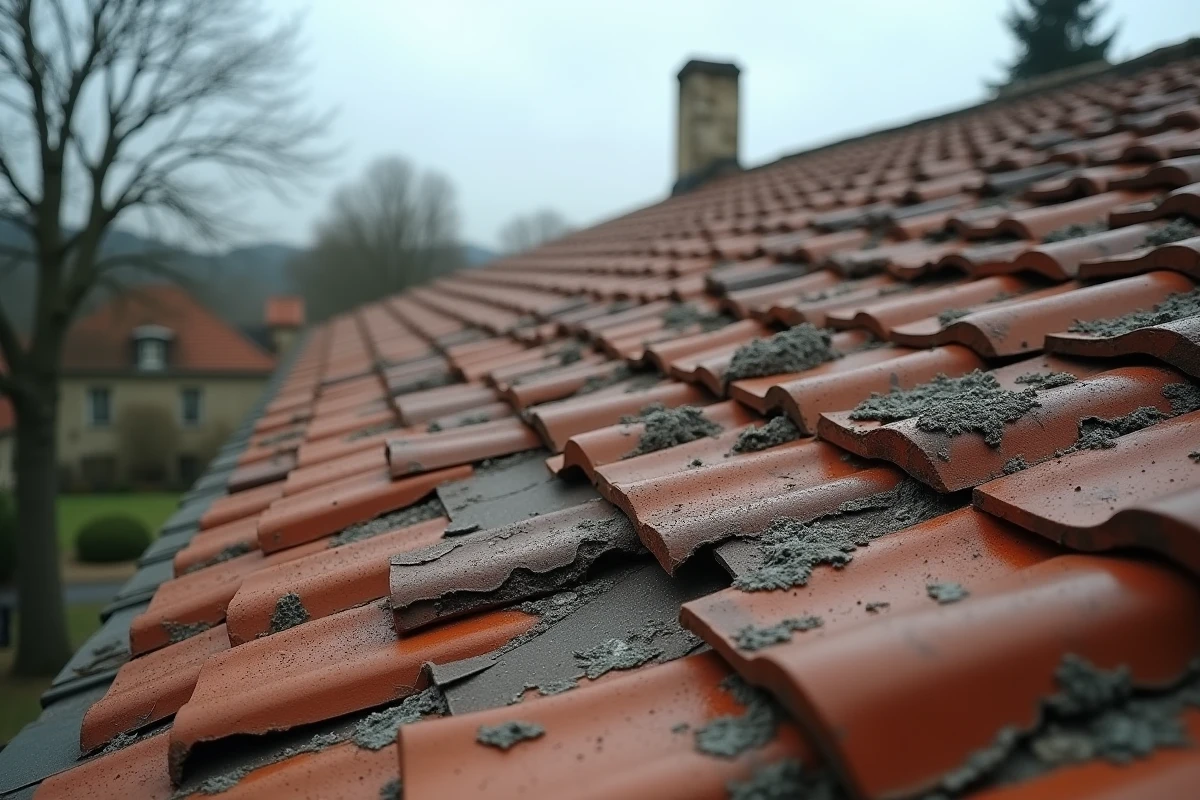
Roofers regularly report on renovation sites concrete tiles installed in the 1980s-1990s that crumble upon touch. Some series from now-defunct manufacturers exhibit advanced porosity incompatible with a simple repair. On these roofs, cracking often affects an entire slope, necessitating complete replacement rather than tile-by-tile intervention.
Clogged gutters and structural cracking: an underestimated link
A clogged gutter does not just cause rainwater to overflow. Chronic overflow creates stagnation at the bottom of the roof slopes, where the tiles overlap the least. Water rises by capillarity under the edge tiles, accelerates their saturation, and promotes cracking due to frost.
This indirect mechanism explains why some roofs have cracks concentrated on the edges and valleys while the rest of the covering appears healthy. Regular maintenance of gutters directly reduces the risk of cracking in these vulnerable areas.
Repairing a cracked tile: sealant, resin, or replacement
The choice of method depends on the severity of the crack and the overall condition of the tile.
Repair with sealant or resin
For a superficial crack (the tile remains in one piece, the edges do not move), applying a sealant or resin is an acceptable temporary solution. The product is applied to a clean, dry tile, following the entire length of the crack.
- Clean the cracked area with a brush, without high pressure, to remove moss and debris without worsening the damage
- Apply the sealant or resin in an even layer, slightly overflowing on each side of the crack to ensure waterproofing
- Allow to dry for the time indicated by the manufacturer before any exposure to rain, which requires choosing a stable weather window
This repair extends the lifespan of the tile by a few years. It does not replace a replacement for a tile whose structure is compromised.
Tile replacement
When the crack goes through the entire thickness, when a piece is missing, or when the tile sounds hollow when tapped, replacement is the only sustainable option. The operation involves lifting the adjacent tiles, removing the damaged tile, and sliding in a new tile of the same model and dimensions.
Finding an identical replacement tile can be the real issue, especially on older roofs or discontinued concrete series. Some roofers and material dealers have second-hand tile stocks, but the timelines vary.
Preventive roof maintenance: actions that prevent cracking
Repair remains a treatment of the symptom. Tiles crack less on a well-maintained roof.
- Inspect the covering twice a year (after winter and after the intense summer heat) to spot cracks before they cause leaks
- Clean the gutters at least once a year, more often if the house is close to deciduous trees
- Treat moss with low-pressure products rather than with a pressure washer, especially on tiles over twenty years old
- Check the condition of the edge and ridge tiles, which are the first exposed to wind and overflow
On a concrete tile roof from the 1980s-1990s, a complete diagnosis by a roofing professional can assess whether spot repairs are sufficient or if the replacement of an entire slope is necessary. Waiting for a leak to appear inside means that the damage has already reached the frame or insulation, which multiplies the cost and complexity of the intervention.