Choosing a truck for professional use involves balancing payload capacity, engine performance, operating costs, and long-term reliability. These four parameters vary depending on whether you are transporting construction materials in rural areas or handling urban distribution in short cycles. Understanding what truly distinguishes one chassis from another helps avoid a poorly calibrated investment.
Engine Torque and Payload Capacity: The Two Criteria That Determine Everything Else
Before comparing brands or models, we must return to two simple concepts. Engine torque, expressed in newton-meters, determines the truck’s ability to tow or start uphill with a loaded trailer. The more torque available at low RPM, the less the engine has to work, and the lower the fuel consumption.
Payload capacity refers to the weight that the vehicle can carry once its own weight is deducted from the GVW (gross vehicle weight). A robust chassis with an appropriate suspension can handle a high payload without compromising road stability.
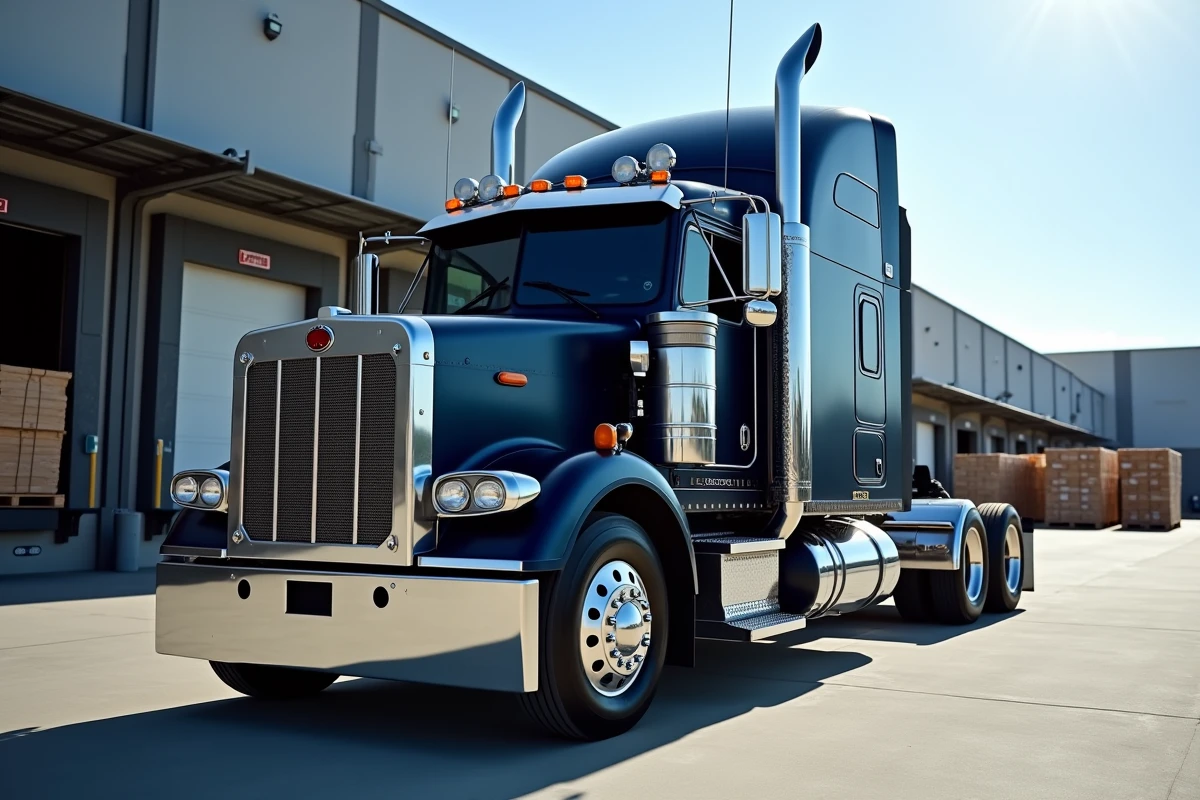
The range of trucks offered on the Kamaz France website illustrates this logic: vehicles designed for heavy-duty missions, with powertrains sized to maintain high torque even on demanding terrains.
Have you ever noticed that an underpowered truck consumes more than a more powerful model on the same route? This is precisely because the engine operates in a state of constant overload. A well-sized truck consumes less than an underpowered model on the same route.

Electric Trucks for Heavy-Duty Uses: Where the Professional Sector Stands
Electrification is no longer limited to light commercial vehicles for urban delivery. Since 2023, several manufacturers have launched electric trucks designed for construction, heavy urban distribution, and waste collection. Models like the Renault Trucks E-Tech D Wide or the Mercedes-Benz eEconic offer chassis that can be fitted with bodies and electric power take-offs.
Why is this distinction useful? Because a construction truck does not just drive: it also powers hydraulic equipment (dump bodies, auxiliary cranes). Electric power take-offs replace traditional hydraulic circuits, reducing noise and eliminating local emissions on-site.
For a small or medium-sized construction or collection company, the question is no longer whether electric options exist in their category, but whether the range and charging infrastructure match their daily routes. A vehicle that travels less than 200 km per day in urban cycles can already operate electrically. Beyond that, or in rural areas without fast charging stations, diesel or hydrogen remains more realistic.
“Truck-as-a-Service” Contracts: Pay Per Kilometer Rather Than Buying
Purchasing a heavy truck requires significant capital. For small and medium fleets, an alternative model has developed since 2023-2024: truck-as-a-service. The principle is simple. The professional pays an all-inclusive monthly or per-kilometer fee, covering the vehicle, maintenance, telematics, and sometimes energy.
Players like Renault Trucks, Volvo Trucks, or specialized rental companies (TIP, Fraikin) offer these packages. The benefit for a small or medium-sized enterprise without an in-house mechanical workshop is clear: no breakdown management, no scheduling of maintenance, no budget surprises.
What a Typical Contract Covers
- The vehicle itself, configured according to business needs (dump, refrigerated, flatbed)
- Preventive and corrective maintenance, with guaranteed response times
- Onboard telematics to monitor consumption, routes, and mechanical status in real-time
- In some cases, fuel or electric charging, included in the per-kilometer fee
This model transforms an investment expense into predictable operating costs. The total cost of ownership becomes clear from the moment the contract is signed, making cash flow forecasting easier.
Embedded Cybersecurity: A Recent Regulatory Requirement for Heavy Trucks
Modern trucks are equipped with dozens of sensors, connected braking systems, telematics, and sometimes semi-autonomous driving. This digitization creates a cybersecurity attack surface that is now regulated.
The R155 and R156 standards, stemming from the UNECE framework, require manufacturers to ensure the vehicle’s cybersecurity throughout its lifecycle, including remote software updates. The first compliance announcements from heavy truck manufacturers (Daimler Truck, Volvo Group) date back to 2023-2024.
For the professional buyer, this means two things:
- A recent truck compliant with R155/R156 receives cybersecurity patches without being immobilized in the workshop
- An older vehicle, not covered by these standards, can become a weak link if its telematics is connected to the company’s information system
Compliance with R155/R156 protects both the vehicle and the fleet’s IT network. This is a purchasing criterion to verify when ordering, just like mechanical warranty.
Choosing a Professional Truck: The Decisions That Really Matter
Comparing the robustness of a chassis or the power of an engine remains necessary. But the profitability of a truck depends on the total cost of ownership, not on the list price. A vehicle that is slightly more expensive to purchase but consumes less, breaks down less often, and retains a reasonable residual value will cost less over five years.
The current ranges, whether diesel, electric, or hybrid, cover nearly all professions: material transport, refrigerated logistics, urban distribution, public works. The challenge for a professional is no longer to find a suitable truck, but to ask the right questions before signing: real autonomy under load, availability of parts, coverage of the maintenance network, and regulatory compliance.