
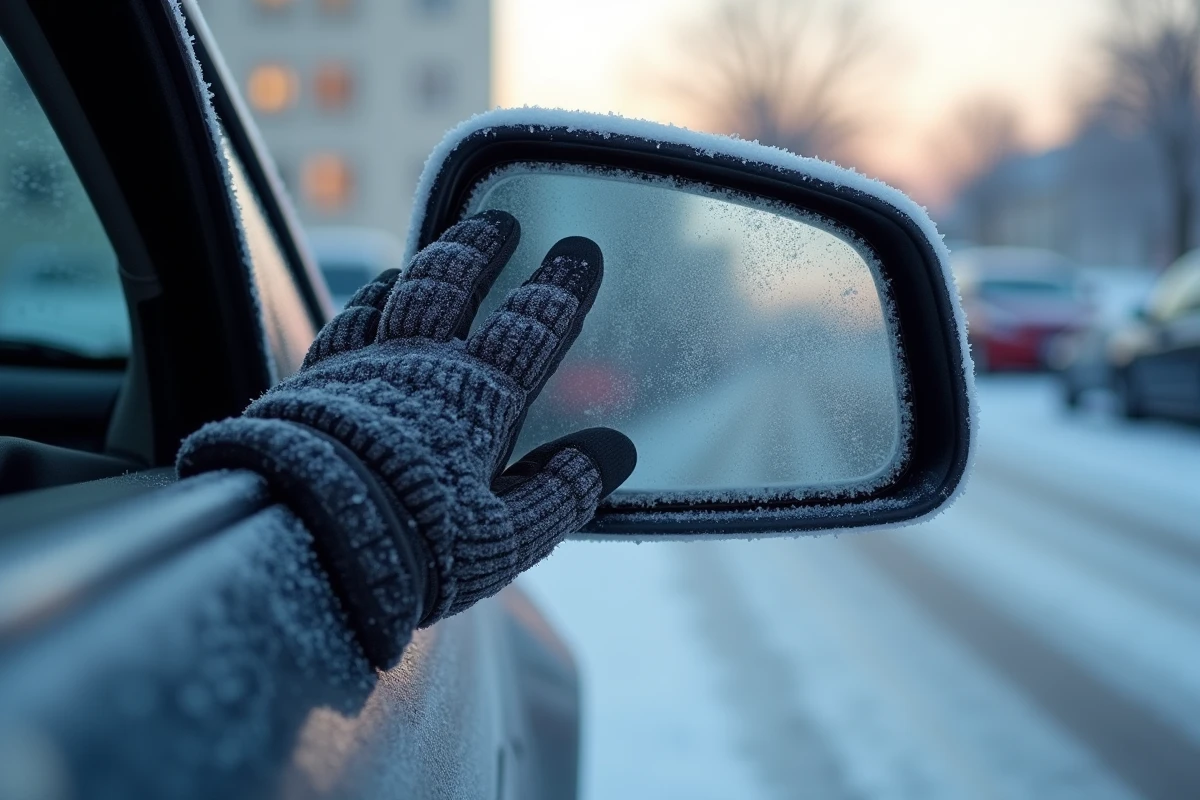
The defrosting of mirrors relies on an electric resistance integrated into the back of the mirror, powered by the vehicle’s electrical circuit. This function heats the glass surface to eliminate frost or fog that reduces side visibility. Depending on the models, its activation varies significantly: dedicated button, coupling with the rear window, adjustment knob, or automatic triggering related to the outside temperature.
Heated mirror resistance: technical operation
The defrosting resistance is a fine conductive mesh glued or printed behind the mirror. When current passes through it, it produces heat through the Joule effect, sufficient to melt a layer of frost in a few minutes.
Read also : Essential Tips for Choosing Your Sports Equipment in 2024
This system consumes little energy compared to defrosting the windshield. The power remains modest, which explains a slower reaction time in extreme cold.
On most thermal vehicles, the resistance is powered as long as the ignition is on and the function is activated. On electric or hybrid models, the management differs: the system may condition activation on whether the vehicle is plugged in to charge, to preserve battery autonomy. Understanding the defrosting of car mirrors allows for using this function at the right time, without searching in vain on the dashboard.
Read also : Tips and Inspirations for Easily Decorating and Designing Your Home
Activating mirror defrosting based on control type
The main trap comes from the fact that there is no single standard among manufacturers. Three control logics coexist.
Button coupled with the rear window
This is the most common case on thermal vehicles from the 2000s to today. The button that activates the defrosting of the rear window simultaneously triggers the heating of the exterior mirrors. No specific light indicates that the mirrors are heating: only the rear window indicator lights up.
This coupled activation automatically turns off after a duration defined by the manufacturer, to limit electrical consumption. If the frost persists, the button must be pressed again.
Adjustment knob for mirrors in defrost position
On the restyled Renault Clio V and Captur II, defrosting is done through the mirror adjustment knob. By turning this knob to the defrost symbol (an icon with wavy lines), the resistance activates. There is no separate button, which confuses drivers used to looking for a dedicated switch on the central console.
Automatic activation conditioned to temperature
Several manufacturers have adopted an automatic logic. On some Hyundai and Kia models, the mirror defrosting only activates when the outside temperature is near or below 0 °C. Pressing the button in mild weather has no effect, which can lead to the belief that there is a malfunction.
The Hyundai Tucson owner’s manual specifies this temperature condition. In case of doubt, checking the vehicle’s user manual remains the most reliable reflex.
Mirror defrosting on electric vehicles: the case of pre-conditioning
100% electric and plug-in hybrid cars add a layer of complexity. On the Volkswagen ID.4 and ID.5, mirror defrosting does not always respond to a physical button in the cabin. It is triggered via remote pre-conditioning, accessible from the manufacturer’s mobile app.
Volkswagen documents this operation in the ID.4 manual: activating remote heating through the “We Connect ID.” app also triggers mirror defrosting, provided the option is installed and the vehicle is charging. Starting pre-conditioning from home a few minutes before departure allows for clear mirrors without manual intervention.
This dependence on being plugged in means that an electric vehicle parked on the street without a charging station may not always benefit from pre-conditioning. In this case, manual activation from the dashboard (if it exists on the model) remains the only option.
Frost on mirrors: complementary solutions when heating is not enough
In extreme cold, the integrated resistance takes time to act. A few complementary actions can speed up the process without risking damage to the mirror.
- Apply a de-icing spray directly on the mirror surface before starting. This type of product melts frost in seconds and facilitates the work of the heating resistance.
- Place a plastic bag over each mirror the night before, secured with a rubber band. This protection prevents frost from forming directly on the mirror. In the morning, simply removing the bag is enough to find a clear surface.
- Use a suitable scraper with care. Mirrors have a more fragile coating than windshields. Prefer a soft plastic scraper, without pressing, to avoid scratching the reflective surface.
Pouring hot water on a frozen mirror is a common mistake. The thermal shock can crack the mirror or detach the heating mesh, rendering the defrosting function permanently unusable.
Check that defrosting works: quick diagnosis
A heating mirror that no longer defrosts may indicate a simple electrical problem that is easy to identify.
- Activate the function and place your hand on the mirror surface after a few minutes. If the glass remains completely cold, the resistance or its power supply is likely faulty.
- Check the fuse associated with the rear window defrosting (since both circuits are often shared). A blown fuse cuts both functions simultaneously.
- On vehicles equipped with onboard diagnostics, a visit to the workshop with an OBD scanner allows checking if the defrosting circuit returns a fault code.
Replacing a mirror resistance is generally done by changing the complete mirror, without disassembling the entire housing. The part remains accessible at auto centers or from the dealer.
Side visibility is as crucial for safety in winter as defrosting the windshield. Locating the exact control on your vehicle before the first cold of the season avoids wasting time in the morning, with the engine running, searching for a button that sometimes simply does not exist.