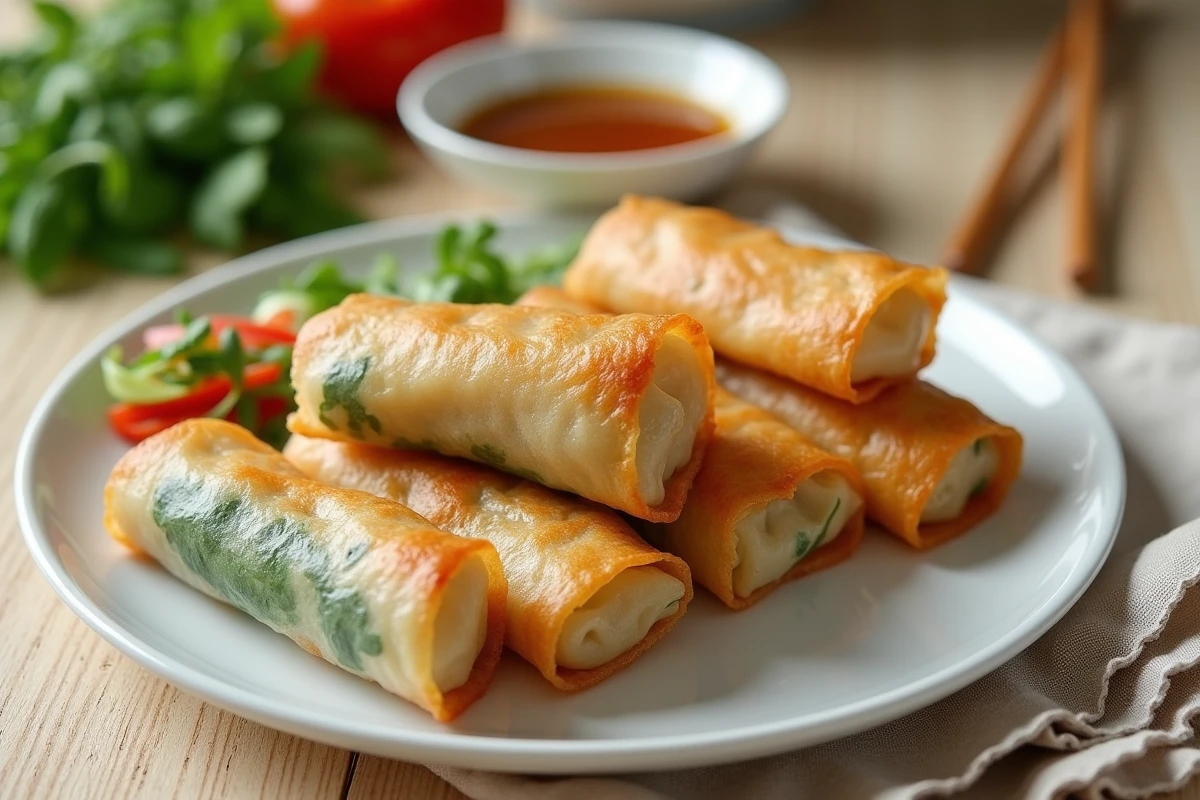
A spring roll rarely weighs more than 50 grams. Yet, the question of whether spring rolls make you gain weight arises with striking regularity whenever Asian cuisine and weight control are discussed. The spring roll itself is just part of the problem: the rice paper, the filling, the frying bath, the sweet sauce next to the plate, and the number of pieces consumed as an appetizer create a more complex picture than a simple calorie count per unit.
What a spring roll really contains before cooking
The rice paper is a nearly pure carbohydrate, low in fiber and protein. Soaked and then filled, it contributes little calories by itself. It’s the filling that shifts the nutritional profile.
A traditional pork spring roll mixes ground meat, rice vermicelli, black mushrooms, grated carrots, and sometimes shrimp. The proportion of fatty meat in the filling varies significantly from one recipe to another. A lean chicken spring roll, like those offered in some “fit” recipes, displays a more favorable protein profile, but the difference also depends on the amount of vermicelli added inside.
Knowing whether spring rolls make you gain weight or not first requires looking at this basic composition, even before discussing cooking methods.
Frying, air fryer, and oven cooking: the real caloric gap between cooking methods
The immersion in high-temperature oil radically transforms the spring roll. The porous rice paper absorbs a notable amount of fat. Frying can double the fat content of a spring roll compared to the same piece cooked by other means.
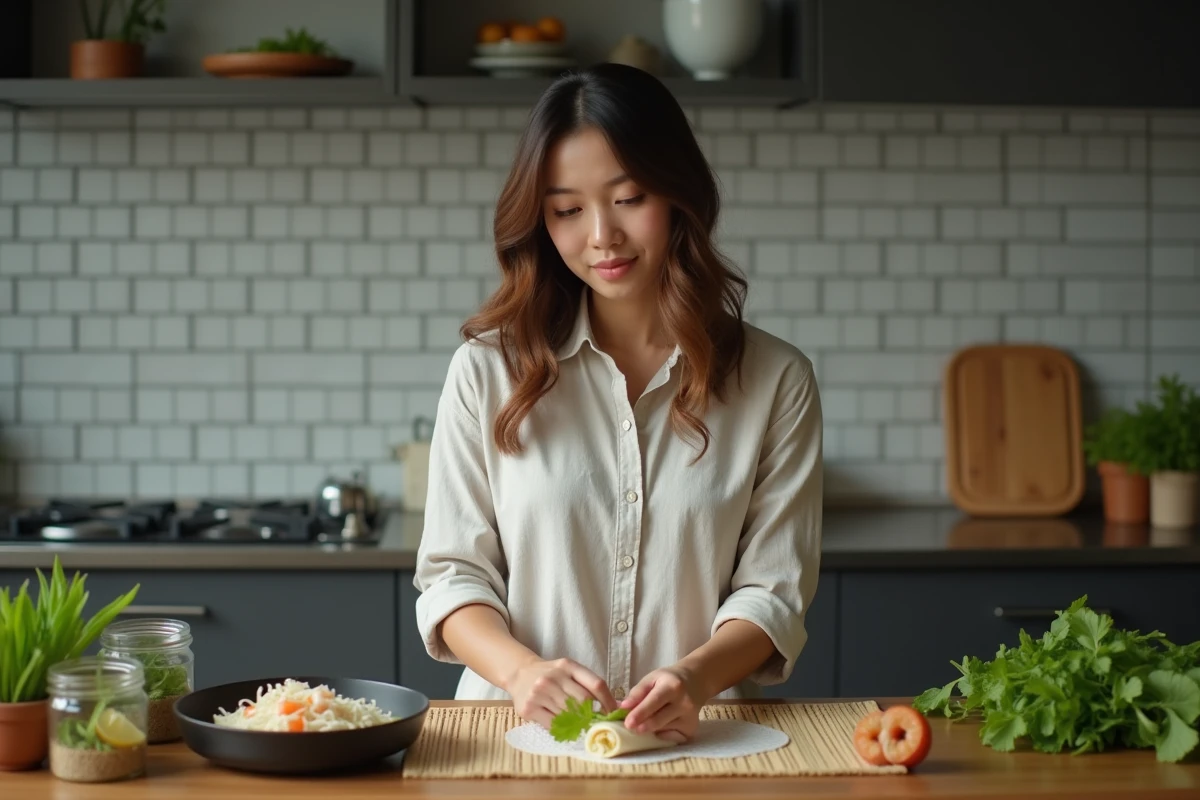
The current trend leans towards two alternatives:
- The air fryer, which uses a hot air flow to achieve a comparable crispiness with a minimal amount of oil (one teaspoon for an entire batch of spring rolls).
- Traditional oven cooking at high temperature, with a light brushing of oil. The result is less crispy than frying, but the reduction in absorbed fat is significant.
- Fresh spring rolls (summer rolls), which completely eliminate the greasy cooking step and focus on the freshness of raw vegetables and herbs.
“Healthy” recipes circulating on social media exploit these alternative cooking methods. The cooking method weighs as much as the filling in the final caloric balance.
Sauce, sides, and number of pieces: the true assessment of a meal with spring rolls
Judging a single spring roll is to evaluate an ingredient without its consumption context. In practice, a meal including spring rolls rarely consists of spring rolls alone.
The sweet nuoc-mâm sauce that systematically accompanies spring rolls in restaurants adds sugar and sodium. Two tablespoons of this sauce represent a modest caloric intake individually, but it accumulates when dipping each bite.
The number of spring rolls consumed has a greater impact on weight than the composition of a single spring roll. Two spring rolls as an appetizer in a balanced meal with vegetables and a lean protein do not pose the same problem as six fried spring rolls accompanied by white rice and sweet sauce.
The trap of the “light Asian meal”
Many consumers perceive a Vietnamese or Chinese meal as lighter than a burger and fries. This perception is based on the visible presence of vegetables and fresh herbs. In contrast, fried spring rolls, rice as a side, and sweet-sour sauces can easily bring the entire meal to a caloric intake equivalent to, or even higher than, a Western fast-food dish.
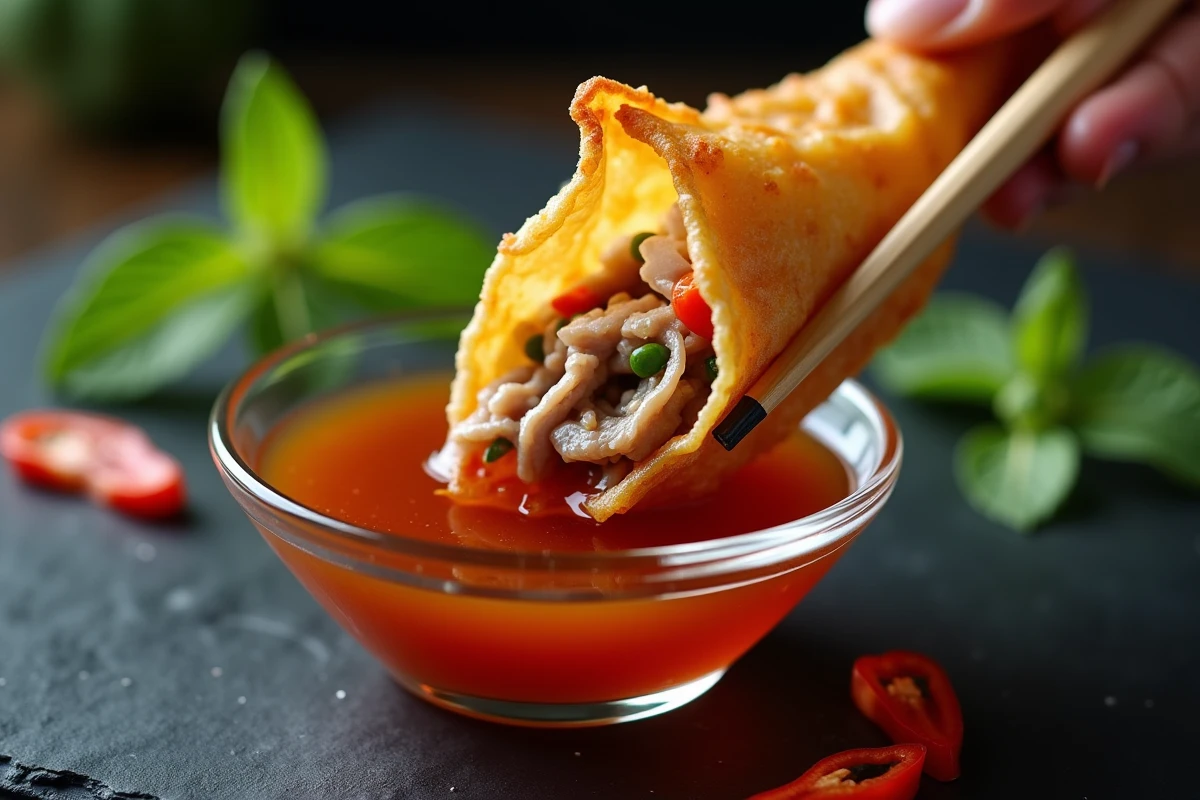
A meal with spring rolls is only healthy or caloric depending on the overall plate, not the spring roll taken in isolation.
Spring rolls and diet: integrate without sabotaging
A spring roll is neither a weight-loss food nor a forbidden food. Its place in a balanced diet depends on concrete choices:
- Favor a filling based on chicken, shrimp, or vegetables rather than fatty pork mixed with excess vermicelli.
- Cook in the oven or air fryer rather than deep frying.
- Limit the accompanying sauce, or replace it with a mixture of lime, unsweetened nuoc-mâm, and fresh chili.
- Count the pieces: two to three spring rolls as an appetizer constitute a reasonable portion, while six or more turn the appetizer into a hypercaloric meal.
Vegetable versions (spring rolls with vegetables, mushrooms) offer a lower caloric profile, provided the cooking method follows suit. A fried vegetable spring roll absorbs as much oil as a pork spring roll.
The question of protein
A classic spring roll provides little protein relative to its volume. The rice paper and vermicelli are carbohydrates. If the meal consists only of spring rolls, the protein intake remains low, which can reduce satiety and lead to overeating. Pairing spring rolls with a complementary protein source (grilled chicken, tofu, fish) balances the meal.
Spring rolls do not inherently make you gain weight, but their preparation method and consumption context determine everything. Reducing the question to “are spring rolls caloric” ignores that frying, sauce, and portion size matter as much, if not more, than the filling itself. An oven-baked spring roll with a lean filling, served in moderation alongside fresh vegetables, is not a diet saboteur.